



Dublin for Young Expats: A Dynamic City Full of Opportunities
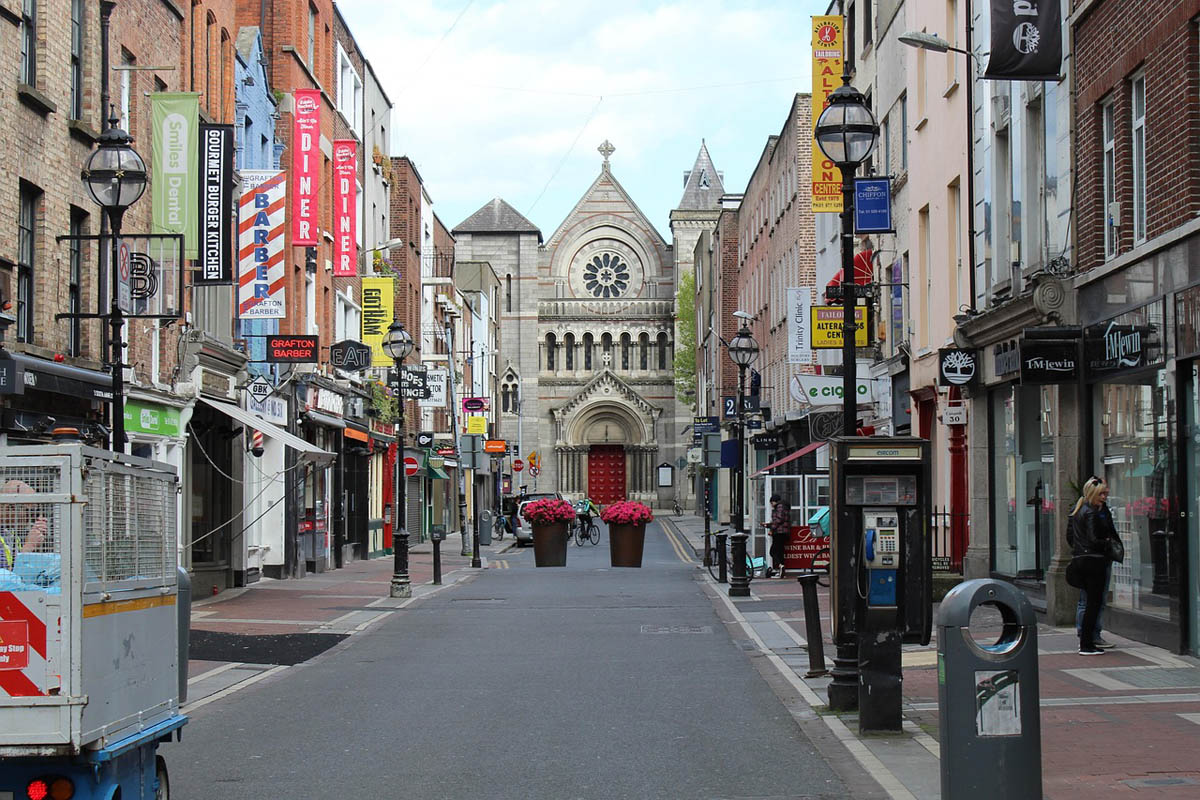
Dublin has established itself in recent years as one of the most attractive European destinations for young expats. The Irish capital doesn't have London's scale or Paris's architectural diversity, but it possesses a unique energy, driven by its open economy, young population, and strong presence of international companies.
For many young professionals, moving to Dublin isn't just a career choice. It's also a way to accelerate your career, improve your English, and live in an international environment where opportunities seem more accessible than elsewhere.
But like any attractive destination, Dublin is a city that must be understood in its entirety. Behind the promises of jobs and competitive salaries, there are also real constraints related to cost of living, housing, and urban pace.
A European Capital Geared Toward the International
Dublin is now a genuine European hub for technology, finance, and digital companies. Many multinationals have established their European headquarters here, attracted by a favorable tax environment and skilled workforce.
This concentration of international companies profoundly transforms the city. For young expats, this means one essential thing: access to an open job market where English is the main language and where international profiles are not only accepted but sought after.
Unlike other European capitals, Dublin doesn't always require perfect mastery of the local language to access interesting opportunities. This greatly facilitates professional integration for newcomers.
This international openness also creates a special atmosphere. In offices, cafes, or coworking spaces, it's common to meet people from all over Europe, but also from Asia, America, or Africa.
The Job Market: A Driver of Attractiveness
One of Dublin's main advantages for young expats is its job market. The technology, international customer service, finance, and digital sectors are particularly developed.
Salaries are often higher than in other European cities for equivalent positions, especially in large international companies. This naturally attracts many recent graduates or early-career professionals.
This professional dynamism often allows for rapid progression. It's not unusual to start in a junior position and evolve in a few years to greater responsibilities, especially in multinational companies.
However, this professional appeal comes with strong competition. Dublin attracts talent from around the world, meaning opportunities exist but also require a certain level of adaptation and performance.
An Ideal City for Improving Your English
For many young expats, Dublin represents above all a linguistic opportunity. Living and working in an English-speaking environment is one of the most effective ways to progress quickly.
Even though the city is very international, English remains the dominant language in professional and administrative life. This naturally forces you to practice daily, accelerating learning.
This language immersion is often one of the most lasting benefits of a stay in Dublin. It has a direct impact on your future career, especially in international environments.
A Rich and Accessible Social Life
Dublin is often described as a warm and welcoming city. This reputation is largely based on Irish culture, known for its friendliness and social skills.
For young expats, this makes integration much easier. Meetings happen relatively easily, whether at work, in pubs, at events, or in public spaces.
Social life in Dublin is also very oriented toward informal outings. Pubs play a central role in local culture—not just as places to drink, but as social spaces.
This social dimension is a real asset for those arriving alone in the city. It allows you to quickly create a circle of acquaintances, which is often a determining factor in overall quality of life.
A Dynamic but Demanding Quality of Life
Quality of life in Dublin is often described as dynamic. The city isn't particularly large, but it's very active, especially thanks to its young, international population.
Cultural activities, events, concerts, and outings are numerous. There's a real urban energy, even if the city remains more compact than some other European capitals.
However, this dynamism comes with a certain intensity. The pace of life can be fast, especially in highly competitive professional environments.
For some expats, this intensity is motivating. For others, it can become exhausting if not balanced with rest and disconnection.
Housing: Dublin's Main Challenge
If Dublin attracts so many, it's also a city that poses real housing difficulties. Demand is very high, especially due to the constant influx of international workers.
Rents are high relative to salaries, and finding housing can be a long, complex process. This situation is often one of the first challenges faced by young expats.
The housing market is tight, sometimes forcing compromises on location, size, or budget. Some choose to share housing—a very common solution in the city.
This real estate reality directly impacts quality of life. It can influence daily stress, commute times, and even overall perception of the city.
A Human-Scale but Very Connected City
Despite its challenges, Dublin remains a relatively accessible city. It's not huge, allowing you to get around easily and maintain a certain proximity between different neighborhoods.
Public transport exists, though not as developed as in some major European capitals. Many trips are made on foot or by bike, contributing to a certain quality of life.
The city's size also fosters a sense of proximity. It's easier to run into people, create habits, and gradually integrate into a social environment.
A Young, International Population
Dublin stands out for the youth of its population. The presence of students, young professionals, and expats creates a dynamic, evolving atmosphere.
This diversity is a major asset for newcomers. It allows you to meet people in similar situations, facilitating integration.
The city largely functions thanks to this mobile, international population. This gives it an open, constantly transforming character.
A Formative Expatriation Experience
Moving to Dublin as a young expat is often a formative experience. It combines professional learning, personal development, and cultural immersion.
The city forces you to adapt quickly to a new environment, new social rules, and a competitive job market.
This experience is often seen as a springboard. Many young people stay a few years before moving on, but leave with strengthened skills and a better understanding of international environments.
An Attractive Destination Despite Its Constraints
Dublin isn't a perfect city, nor does it try to be. It's first and foremost a dynamic economic center, globally oriented, with its advantages and limits.
What makes it strong is the balance of professional opportunities, active social life, and cultural openness. Its main weakness is housing costs and real estate pressure.
For young expats, Dublin therefore represents a real opportunity, but one that requires preparation and adaptation.
It's a city that rewards commitment, curiosity, and the ability to evolve in a demanding international environment.
In this sense, Dublin isn't just a destination. It's often an important step in a professional and personal journey.