 Français
 Deutsch
 Español
 Italiano
 Português
 Nederlands




Malaysia: The Different Visas for Moving There
In recent years, Malaysia has established itself as one of the most attractive destinations for expatriation in Southeast Asia.
This isn't accidental. The country checks several important boxes—things you find elsewhere, but rarely all in the same place.
A still-reasonable cost of living, modern infrastructure, relative political stability, a constant tropical climate, and a striking cultural diversity.
Taken individually, these elements aren't exceptional. But together, they create a balance that continues to draw more and more foreigners.
A Country That Appeals to Very Different Profiles
What's also striking is the variety of people who choose Malaysia.
You have retirees from Europe seeking sun and simplicity.
Digital nomads, staying for a few months or several years, often bouncing between countries.
International entrepreneurs, drawn by regional opportunities.
And expat families looking for a more comfortable environment for their children.
Then there are those with more specific journeys, seeking a change of pace—sometimes for deeply personal, even spiritual reasons, like projects related to hijra.
Between Ideal Image and On-the-Ground Reality
On social media, Malaysia often looks incredibly appealing.
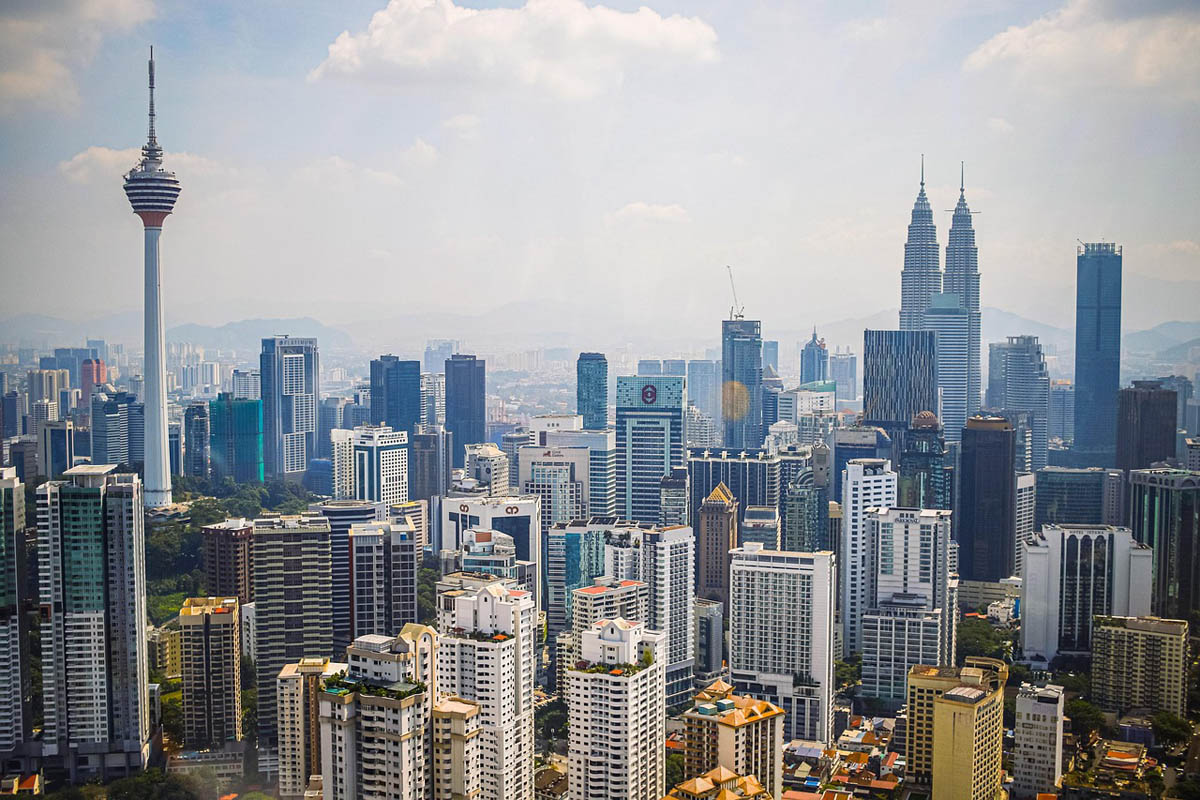
Modern apartments with swimming pools, stylish cafes, Kuala Lumpur rooftops, a comfortable life on what seems like a reasonable budget… everything looks easy.
But once you're there, the reality is a bit more nuanced.
Day-to-day life depends heavily on your residency status, the type of visa you have, and most importantly, your income level.
And that's often where things get more technical.
A Strategic Location in Southeast Asia
Malaysia occupies an interesting position in the region. It's often described as a balancing point between several worlds.
On one hand, it's more developed and better organized than some neighbors like Cambodia or Laos. Infrastructure is generally modern, services work reasonably well, and the economy is relatively stable.
On the other hand, it's still significantly more affordable than hubs like Singapore, Hong Kong, or parts of Japan. It's precisely this middle-ground positioning that explains its growing appeal.
The main expatriation hubs are well-established:
- Kuala Lumpur, the modern capital and economic center
- Penang, often valued for its quality of life and cultural mix
- Johor Bahru, right next to Singapore
In these cities, daily life can be comfortable, especially for those with a stable income in foreign currency.
Social media has amplified this image, showcasing modern apartments, rooftop pools, stylish cafes, and a generally comfortable lifestyle on a budget. But that window reflects only a portion of the reality—often the side of expats already well-established financially.
The Main Visas for Living in Malaysia
Moving to Malaysia depends on a fairly structured visa system. There isn't a single "expat visa," but several programs tailored to specific profiles.
1. Malaysia My Second Home (MM2H)
The MM2H program is one of the best-known for long-term residents. It has undergone a major reform in recent years to become more selective, targeting financially strong applicants.
Silver Category
- Fixed deposit: 500,000 MYR
- Validity: 5 years, renewable
- Property purchase: generally required, depending on the state
- Work authorization: not allowed
This tier is often aimed at retirees or those seeking a stable second home without local employment.
Gold Category
- Fixed deposit: 2 million MYR
- Validity: 15 years, renewable
- Property: usually from 1 million MYR
- Economic activity: possible under certain conditions
This category targets wealthier individuals looking for a long-term stay with some flexibility.
Platinum Category
- Fixed deposit: 5 million MYR
- Status: near-permanent residence
- Work and entrepreneurship allowed
- High-end property required
This is clearly the highest level, reserved for a tiny minority of applicants.
MM2H General Conditions
Despite these differences, some rules remain common:
- Minimum age: 30
- Minimum stay: 90 days per year
- Mandatory health insurance
- Clean criminal record
- Medical screening required
A common misconception: part of the bank deposit can be withdrawn after one year (up to 50%), but only for specific local expenses like property, healthcare, or education.
2. PVIP (Premium Visa Programme)
The PVIP is a newer program positioned at the high end of the market.
It targets investors, entrepreneurs, and high-income professionals.
What It Offers
- Long-term visa: up to 20 years
- No minimum residency requirement
- Right to work and start a business
- No age criteria
- Extended family can be included
On paper, it's one of the most flexible visas in the region.
Financial Requirements
- Minimum foreign monthly income: 40,000 MYR
- Fixed deposit: 1 million MYR
After one year, up to 50% of the deposit can be used for local expenses. Still, this program is clearly aimed at very affluent individuals.
3. Employment Pass (Work Visa)
The Employment Pass is the main work visa in Malaysia. It depends entirely on the employer and salary level.
Category I
- Minimum salary: 20,000 MYR/month
- Validity: up to 10 years cumulative
- Profiles: executives, experts, senior managers
- Family included
Category II
- Salary: 10,000–19,999 MYR/month
- Validity: up to 10 years
- Succession plan required
- Family included
Category III
- Salary: 5,000–9,999 MYR/month
- Validity: up to 5 years
- Local training requirement
- Family now included
This recent change makes this tier more accessible to technical and mid-level profiles.
4. Student Pass
The Student Pass is managed by EMGS, which centralizes all procedures.
Main Steps
- Admission to a university
- EMGS validation (VAL)
- Medical check
- Student visa issuance + i-Kad
Maintenance Requirements
- Mandatory attendance: at least 80%
- Academic results: CGPA ≥ 2.0 / 4.0
This visa is strictly monitored to prevent unauthorized work.
5. Dependent Pass (Family Visa)
The Dependent Pass allows family members of a principal resident to live in Malaysia.
Eligible Individuals
- Legal spouse
- Children under 18
- Disabled children (no age limit)
It's important to note that the spouse doesn't automatically have the right to work. A separate application is required.
6. DE Rantau (Digital Nomad Visa)
The DE Rantau Pass is designed for digital workers.
Target Profiles
- Digital freelancers
- Developers, designers, marketers
- International remote workers
Main Requirements
- Minimum income: $24,000 USD per year
- Proof of remote work activity
- Validity: 3 to 12 months, renewable
This visa is valued for its simplicity and fast processing.
Visa via a Labuan Company
Another option is setting up a company in Labuan, a special jurisdiction in Malaysia.
Advantages
- Residence possible anywhere in the country
- Minimum salary: 10,000 MYR
- Full foreign ownership allowed (100%)
- Family included
Taxation
- 3% on international profits
- Physical office required in Labuan
- Minimum of 2 local employees
Non-compliance can result in taxation up to 24%.
S-MM2H (Sarawak MM2H)
The S-MM2H is a more flexible regional version of the MM2H program, managed by the state of Sarawak.
Advantages
- Lower bank deposit: 150,000–300,000 MYR
- No property purchase requirement
- 10-year renewable visa
- Accessible from age 30
Requirements
- Income: 7,000–10,000 MYR/month
- Minimum stay: 30 days per year in Sarawak
- Remote work allowed, plus some local activities
This program is often seen as one of the most accessible for long-term stays in Malaysia.
Conclusion: An Attractive but Structured Destination
Malaysia has established itself as a major destination for expatriation in Southeast Asia. Its appeal lies in a rare balance of modernity, reasonable cost of living, and variety of residency options.
But it's essential to understand that each profile corresponds to a specific visa. There isn't one path to settlement, but several clearly defined options:
- Affluent retirees (MM2H / PVIP)
- Corporate expats (Employment Pass)
- Digital nomads (DE Rantau)
- Entrepreneurs (Labuan)
- Students (Student Pass)
In practice, the choice depends mainly on three things: your budget, your professional activity, and your long-term life plan.
Malaysia, therefore, isn't just a "trendy" destination. It's a structured country with clear rules, favoring organized immigration over open-door policies.