 Français
 Deutsch
 Español
 Italiano
 Português
 Nederlands




Munich (Germany)
City Scores
| Criterion | Score |
|---|---|
| 🛡️ Safety | 8.8/10 |
| 💰 Cost of Living | 3.5/10 |
| ☀️ Climate | 6.2/10 |
| 🌿 Environment | 8.7/10 |
| 🎭 Culture | 8.3/10 |
| 🚌 Transportation | 9.0/10 |
| 🏥 Healthcare | 8.8/10 |
| 📚 Education | 8.9/10 |
| 🏪 Commerce & Services | 8.4/10 |
| 💼 Economic Opportunities | 9.2/10 |
About the City
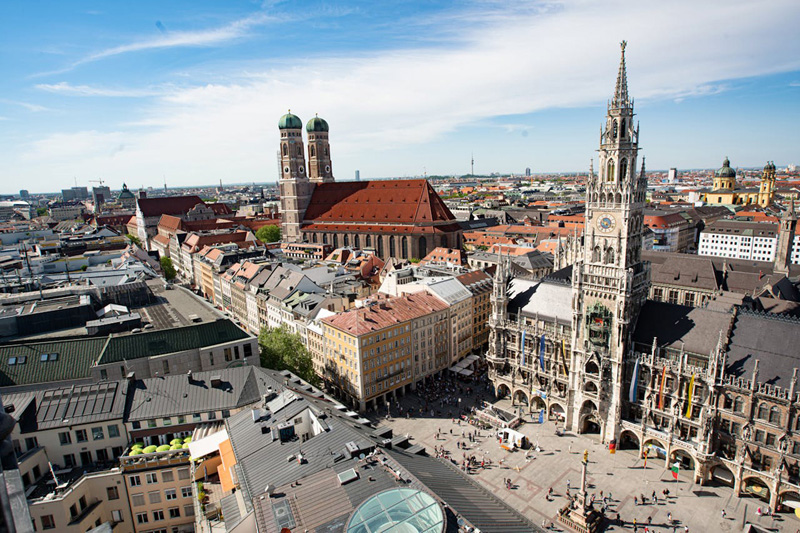
Nestled near the northern foothills of the Alps, Munich effortlessly combines historical grandeur with a forward-thinking economic dynamism that defines modern Bavaria. The city is widely celebrated for its exceptionally high quality of life, where pristine public parks and centuries-old architecture stand alongside cutting-edge technology hubs. Residents benefit from an atmosphere that balances professional productivity with the traditional Bavarian warmth often referred to as Gemütlichkeit.
Top Attractions
The magnificent Marienplatz serves as the city's beating heart, drawing visitors from around the globe to witness the intricate dance of the historic Glockenspiel. Just a short walk away, the sprawling English Garden offers a unique urban oasis where people can watch surfers tackle the static Eisbach wave or relax by an authentic beer garden. For cultural enthusiasts, the Kunstareal museum district provides world-class art collections spanning from classical masterpieces to contemporary designs.
Quality of Life Criteria
Munich consistently ranks as one of the safest metropolitan areas in Europe due to low violent crime rates. The visible presence of local law enforcement provides a continuous sense of security throughout the day and night. Public transport networks are incredibly secure, allowing lone travelers to commute peacefully at any hour. Neighborhoods across the city maintain a community-focused vigilance that prevents property crimes effectively. Overall, both residents and international tourists can enjoy urban spaces without any major safety concerns.
The cost of living in Munich is notoriously high, presenting a significant financial hurdle for newcomers. Housing remains the largest expense, with rental prices in central neighborhoods commanding extreme premiums. Daily consumer goods, supermarket groceries, and restaurant dining reflect the affluent purchasing power of the local population. While utilities and healthcare insurance add to the heavy monthly burden, public transport is relatively affordable. Consequently, individuals must secure a substantial salary to live comfortably in this competitive Bavarian market.
Munich experiences a fully continental climate with distinct seasonal shifts and unpredictable mountain weather patterns. Summers are pleasantly warm and invite extensive outdoor activities, though they are frequently punctuated by heavy thunderstorms. Autumn brings stunning golden foliage alongside a crisp atmosphere, leading into cold winters that often bring thick snowfall. Foehn winds blowing from the Alps can cause rapid temperature spikes and sudden headaches for sensitive individuals. Rainfall is distributed fairly evenly throughout the year, meaning carrying a compact umbrella is a wise daily habit.
Environmental policies are deeply integrated into the structural planning and daily governance of the city. Expansive green lungs like the English Garden offer vast, unpolluted sanctuaries right next to the busy center. Air quality is carefully monitored through strict emissions zones that effectively restrict older, polluting vehicles from entering. The clean waters of the Isar River flow directly through the urban landscape, serving as a pristine recreational area. Comprehensive waste separation and recycling initiatives are enthusiastically supported by the environmentally conscious populace.
Bavarian heritage merges seamlessly with sophisticated cosmopolitan culture through a wealth of museums and festivals. The world-famous Oktoberfest showcases deep-rooted traditions, while classical opera houses host premier international talent year-round. Art lovers can spend days exploring the Kunstareal district, which houses centuries of creative masterpieces. Independent theaters, historic breweries, and diverse cultural community centers ensure there is always something engaging to experience. The city embraces its historical roots while slowly opening up to contemporary global artistic movements.
The public transportation infrastructure is a model of German engineering, utilizing a fully integrated transit grid. Passengers can easily transition between subterranean U-Bahn lines, surface trams, regional S-Bahn trains, and punctual buses. Ticket integration is completely streamlined, allowing commuters to use all modes of transit with a single digital pass. Extensive and clearly marked bicycle lanes cover almost every major street, encouraging eco-friendly personal mobility. Traffic congestion does occur during rush hours, but the reliable rail alternatives mitigate major commuting delays.
Medical care in Munich is outstanding, boasting some of the most technologically advanced hospitals in the country. Patients have immediate access to world-renowned specialists and cutting-edge treatments across all medical disciplines. Universal healthcare integration ensures that comprehensive medical services remain accessible to every single legal resident. Wait times for urgent procedures are minimal, and emergency response teams arrive with exceptional speed. Pharmacies are conveniently distributed throughout all municipal districts, providing expert pharmacological guidance to the public.
The local educational ecosystem is prestigious, featuring elite academic institutions that consistently excel on global scales. Public schools follow the rigorous Bavarian curriculum, which is highly respected across the nation for its academic depth. Families can also choose from several well-established international schools catering to the diverse expatriate community. Higher education is anchored by institutions like the Ludwig Maximilian University, drawing top-tier academic minds globally. Comprehensive public funding ensures that world-class university education remains entirely tuition-free for qualified students.
Commercial services are highly developed, featuring a balanced mix of luxury boutiques and practical retail centers. Iconic shopping avenues like Kaufingerstraße offer a diverse array of global brands and traditional department stores. Neighborhoods are well-equipped with local supermarkets, organic food shops, and essential artisan bakeries. Digital administrative services are expanding rapidly, simplifying bureaucratic tasks for the tech-savvy population. The only notable drawback remains the strict Sunday closing laws, which require careful weekend shopping adjustments.
Munich stands as a powerful economic engine, hosting multiple global corporate headquarters and thriving tech ecosystems. Industries such as automotive manufacturing, aerospace engineering, insurance, and biotechnology offer lucrative career paths. The job market is remarkably resilient, maintaining exceptionally low unemployment rates compared to other European hubs. Young entrepreneurs benefit from robust venture capital networks and strong institutional support from local universities. While the professional environment is intensely competitive, it provides unparalleled long-term financial security and professional growth.
City Comparison
| Criterion | Munich | Prague | Frankfurt |
|---|---|---|---|
| 💰 Cost of Living | 3.5/10 | 6.5/10 | 4/10 |
| 🏠 Real estate | 1 650€ | 1 150€ | 1 500€ |
| 🚨 Safety | 8.8/10 | 9.2/10 | 8/10 |
| 🌡️ Climate | 120 days of sunshine | 4 days of sunshine | 365 days of sunshine |
| 💼 Economic Opportunities | 9.2/10 | 8.5/10 | 9.5/10 |
| 🚗 Transportation | 9/10 | 9.4/10 | 9/10 |
| Quality of life | 8.4/10 | 8.4/10 | 8.2/10 |